Showing posts with label intent. Show all posts

Sunday, 2 September 2018

Mindset.

I originally had this piece of writing in another blog post I am drafting but then I realised it deserves its own post. I wish to write about the mindset of our koryu ancestors.
Samurai Mask.
There is an excellent article written in this book "Koryu Bujutsu - Classical Warrior Traditions of Japan" Where the mindset of the Japanese combatant is discussed. Ideally the mindset of a warrior should be cool and calm, with a predator's focus. A story that highlights this mindset well is one told to me by a fellow TSYR deshi. He works for the Australian military and he volunteered to be a "hostage" on a training exercise where he and others were on a bus taken over by "terrorists". The Special Forces guys had to take the bus back. This was one of two activities he was involved with. A  prior activity found my friend seated in front of one of these SF gentlemen who looked like he had not had much sleep and had circles under his eyes but was completely focused and ice cold. Upon starting the siege of a grounded plane these soldiers dominated the space with precision, aggression and speed. When it came time for the exercises it was like the special forces guys exploded into action and while things were done quickly there was no discernible haste, just well-practised actions performed without hesitation. To give you an idea of just how aggressive and uncompromising these SF guys are, my friend experienced being "arrested" so quickly and so aggressively he thought he had broken his arm and cheek bone. The SF men are a perfect example of the modern day warrior who still faces the reality of dying suddenly. They still have the warrior's mindset. 

The Japanese term to describe this cold-blooded mindset is fudoshin. It describes the ability to overcome the typical reactions to sudden violence and stay calm under stress. Where many of us may panic, freeze, or be overcome with rage, the trained warrior remains calm and doesn't hesitate. This allows the warrior to continue to access the movement patterns that will keep him or her alive. When I read about fudoshin in modern budo, it sometimes seems to me that the concept has become romanticised or diluted. Words that are often used are; staying strong in the face of attack, retaining composure or a quality that lets no outside influence affect your mind. While I believe this is true and is a great way to describe the concept to the modern budo practitioner, I don't think it is exactly the same thing to a true combatant that must face the reality of sudden violence and death. If I am to understand the mindset of the feudal Japanese warrior then the uglier, cold-blooded version makes more sense to me.

I know some of you reading this might say, "Hold on a minute. TSYR and many of the koryu founded in the Edo period were founded in times of peace. The Japanese warrior-class did not face death on a daily basis." I would argue that they still faced the prospect of death in the form of ritual suicide or seppuku. To face killing yourself by disembowelment would have required an incredible strength of will. Although killing yourself to follow your lord into death was banned during the Tokugawa period, seppuku could still be ordered of you by law and was often held in the presence of officials. 
The well-known samurai classic, Hagakure (written sometime in the early 1700s) has this to say,
"The Way of the Samurai is found in death. When it comes to either/or, there is only the quick choice of death. It is not particularly difficult. Be determined and advance."
It is clear to me that Fudoshin still very much applied to the 'peaceful' samurai.

Fudoshin is not the only component to the mindset of a budo practitioner. To be able to keep a relaxed vigilance in everything you do is important for a warrior. The Japanese term for such a state is zanshin and can be explained as being constantly aware of your mind, body and surroundings while remaining calm. Zanshin can be practised by being alert from beginning to end of a kata. It can be practised in the simple art of bowing. Zanshin would have had to be highly refined in the Edo period samurai as the society of the time demanded knowledge of many daily rituals. Should this etiquette not be observed, the samurai could find themselves in trouble quickly. By being constantly alert and observant, he or she was watching what others are doing, watching body language and looking at their surroundings to make sure they didn't act in an impolite manner.

Even a person who has trained their minds to exhibit fudoshin and zanshin would still not have the complete mindset of a warrior without one last component. In my martial study I have heard it called "intent", in the article I referred to earlier, it is called "volition" I would go further to say it is "permission" (a term from this article). It is the motivation the combatant has to see his or her actions through. In samurai stories it is common to have two swordsmen square off. Neither attacking, both waiting and watching. Suddenly one withdraws and bows, knowing he would have lost the encounter. This rather dramatic scenario illustrates that if your intent is stronger than your adversaries, then you will win. For me, this is one of the most challenging psychological lines to cross. To intentionally harm another person is difficult when you have had years of societal conditioning about what is right and wrong. It is against the law to assault someone. Yet, a warrior's mindset must allow a time for a switch to be flipped, a moment when you give yourself that permission to do harm without hesitation.

In the dojo environment, my training partners have given their consent for me to practice on their limbs and bodies. Yet we all know no one is out to really hurt the other. No matter how good I think my waza is getting, no matter how much I train fudoshin or zanshin, we all know that this is not a fight to the death. This is why it is up to me and my training partners to increase the intensity. To challenge the other person so they build skill under stress. Only then can we get a glimpse into the mind of a feudal Japanese warrior.



Sunday, 11 February 2018

A Good Day of Training.

Yesterday (Saturday), I had a very satisfying day of training. A friend of mine from Auckland had come down Friday night. He joined us at the Hamilton dojo for the morning session. Then after lunch we drove back out to my place for a further two hours of training.

As usual McMahon sensei was on form and we worked through five idori hand releases. I always enjoy these exercises as they focus on very precise movement and sensitivity.

After the idori we moved to standing techniques from a cross-hand grab. We worked on flow and intensity while trying to keep to good form. By the time we worked through all of those, the session was near its end. I certainly felt wrung out and my body felt loose and strong.

The training at my own dojo was slower and steady. We went back over the five idori from the morning session to reinforce the key ideas then moved to five idori kata that require a more aggressive mindset.

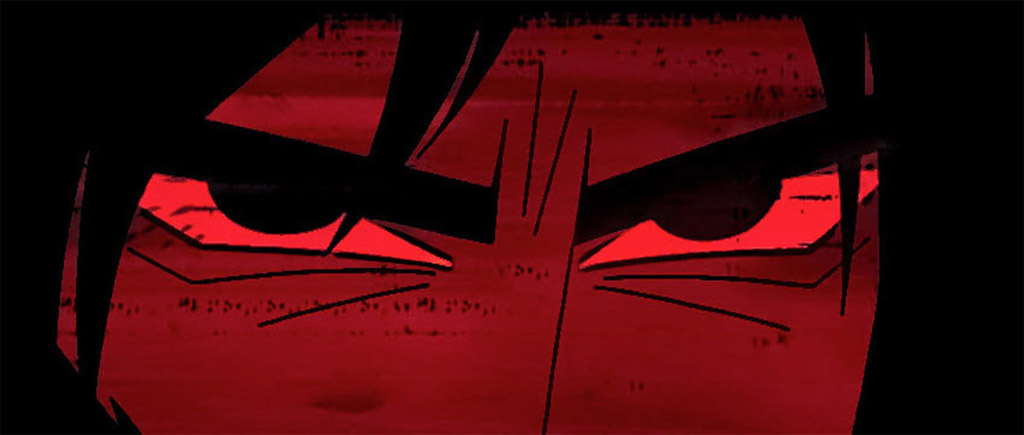
Predatory gaze of Samurai Jack.

The mindset of a TSYR practitioner should be that of a predator. Patiently hunting the opponent, pressing for an advantage, waiting for a mistake to occur. When an opening presents itself move in without hesitation and finish quickly. Many of the kata we were working on involves the uchitachi initiating AND finishing the kata. The initial movement must not alert the uchitachi of the attacker's intentions and then, once started, the job must be finished quickly and precisely with certainty.

We worked on getting intent into the movements, not just going through the motions. It was very much a session of study and critique. Very enjoyable but a different pace from the morning.


Tuesday, 10 January 2017

Budo Body Part III

I would like to discuss more about how my body is changing due to the training I am doing in Takamura-ha Shindo Yoshin Ryu. In this martial tradition there is a set of exercises called Nairiki no gyo. These exercises are supposedly descended from southern Chinese martial traditions. These exercises attempt to create a body that is "capable of unified, powerful and relaxed movement that also manifests an extremely expanded level of sensitivity." As quoted by Threadgill sensei.

Practitioners that develop this body skill to a high level can not only feel acutely into their own bodies but through a sensitive neuro-feedback network, they can also sense someone else's center of gravity the moment they are touched.

Threadgill sensei demonstrating a connected body.
In the above picture, Threadgill sensei is not leaning on his training partners, he is simply channelling the force through is body and into the ground. The two men might as well be pushing directly at the floor, they would get the same result. If the two men were to suddenly jump away, Threadgill would not fall over, but merely stand up a little straighter like a spring released. 

There is a mental component to this as well. Intent is very important but after the physical skills are learned. Threadgill sensei says that after 20 years of training he can now think "right shoulder" and the adversary will fall right. This is a very advance mind-body connection. Everyone is capable of this sort of control. For instance, we do not think, pick up the spoon, we just pick up the spoon. Same thing but we are manipulating another person in doing so.

I like the word 'tone' in describing how my body is set up. Threadgill sensei used this term once on a forum and I find is fits perfectly. Without tone in my body, I can't begin to do some of things this training asks of me. In aikido I was always told to 'relax'. The problem with this direction is that I would relax ALL muscles involved and go sort of limp. This is the wrong idea, I think a better way of saying this would be to relax the unnecessary muscles and leave the others firing to generate the tone sensei talks about. I have spoken in the past about the posterior muscles playing an important part in this training. Without certain muscles firing we would have no structure at all. However, when only these muscles are firing, this sets up a body with sound structure that makes the most of the hips and legs in a unified manner. If you use your muscles in an isolated way, tone is going on and off and changing direction which leaves you open to counters. When I am training with someone and I take the role of uchitachi (uke) if I feel my training partner lose connection with me, I can re-establish control and counter-attack. At that point, he or she has lost the unified tone required and given me an opening and vice versa if I lose tone during a technique. A large part of our training these days is trying to perform the technique from start to finish with tone so that our opponent does not have a chance to get the upper-hand at any moment.

The extreme of this type of sensitive connection is using swords. If I touch my adversaries blade with my blade, and I do it with tone it gives me a connection to their entire structure without them knowing and I would have them from the beginning. This, however is beyond me at this stage. I find this very difficult.

Along with the Naikriki no gyo there are a series of kunren (drills) we do to help develop the budo body. Many involve another person providing resistance so we can work on channelling force through our structure while manipulating the other person.

So where am I with all this?
I would like to talk about the hara. This is difficult to discuss but I will try. Hara is a Japanese term describing an area just below the belly-button and is associated with esoteric things such as ki and life force etc. I will be using the term to describe a feeling I get in this area when I am moving with correct structure in my training and I feel my 'hara'.

My current understanding of what my hara is involves the muscles around the head of the femur, the pelvis area in general including the front and the back. When I am using my hara correctly I feel all my weight sitting in this area. As I manipulate incoming force it feels like I have a ball the size of an orange rotating and moving in this area, almost like a gyro.  The challenge I have is to ensure tone throughout my body so that I get this heavy feeling in my hara. In fact when I nail it I feel the weight seep all the way into my feet and the ground. A very important part of this is the alignment of the spine. The spine must be correctly aligned to prevent 'kinks' that would cause a part of my body to be isolated and then prevent a unified structure. So this includes the angle of the pelvis, having the back straight and head pulled up. The spine is a chain of bones and this means it can take a while to find this position. Constant training allows you to feel the right position for your spine. In the resistance drills your partner slowly adds force and you will find very quickly if your alignment is out because you will not be able to withstand their force without exerting your own. This is the wrong thing to do.If you find yourself pushing back, this is incorrect.

The muscles around my shoulder girdle are thicker than they used to be and I think this is partly due to my poor shoulder alignment. Over the years I have learned to pull them back and down so they sit on the skeleton correctly. This has resulted in the muscles around this area strengthening to maintain this position. I have always had small shoulders with very flexible ligaments. This extreme flexibility has worked against me as this meant my shoulders were disconnected from the rest of my structure. In fact many of us have found that the shoulder joint is one area that becomes a 'choke point' when trying to establish connection. Through life-long habits we engage the deltoid muscles readily when they are not required in the exercise. This is one group of muscles that need to relax. They are unnecessary to the movement. When those muscles relax, the force can travel to the hara and be felt there.

Another area that I have developed is the cross-connection. The left hip moves the right shoulder or vice versa. This is useful in fooling your opponent in not knowing where the power of a technique is coming from. They expect the power to be coming from that arm, but the opposite hip (and leg) is powering it and they can't counter.

The more I train my budo body the more I am finding the alignment of the skeleton is important. The tone generated by the muscles is there to keep that alignment in place. There is much more I could talk about but I think that will do for now. 


Saturday, 8 February 2014

Levels of Training

Today's training was challenging in many ways.
First, the weather made for very humid conditions and it felt like we were training in a Sauna. Within minutes of warming up we were sweating heavily. Secondly, Sensei split the group into two groups with the theme of developing a strong focus between partners during the kumitachi. The group I was part of was asked to work through the two shoden kumitachi but with emphasis on complete focus from beginning to end. We were also asked to challenge each other with faster attacks. The result was a very intense class that fatigued us quickly due to the concentration required. It is to be expected. Sensei is trying to lift our game.
Time and time again, I hear or read about going back to the kata. This is an example of this. We all have much to learn from the very first kata. We now know the kata but aspects have yet to be internalised. It really felt like we were doing something completely different. It was invigorating and challenging at the same time.
After this, we worked on the first of the chuden kumitachi. This was done at a slower pace as not all of us had done these techniques before.
Once again I find myself reflecting on just how much more there is to learn in this art. I am excited by what may lie ahead.

Tuesday, 10 September 2013

The Witchy Stuff

The above title was in the subject heading of an email a friend of mine sent to me today. He is an aikido practitioner and a good friend who started his aikido training at my old dojo here in NZ then continued his practice back in the States. Here is what he had to say:
On Sundays, an old Taekwondo friend and I go to a hunting property that we lease to work on stuff. We always talk about martial arts, our dojos, etc. I started to tell him this story and then stopped. He would think that I'm crazy, delusional, etc.
Erwin had started to push me by stepping up his attacks (in terms of speed, power, intent). Even if I make the correct shape, with the correct distance and the correct timing, he can shut me down almost every time. I started trying something different a few weeks ago (out of desperation!) and it works better each time I do it. The split second before he touches me, I visualize blasting his center with my intent. It's amazing! Many times, he goes down before he can touch me. He swears that he not taking a fall. It doesn't matter what the attack or technique is. To test it, I can make the same shape without the blast and it doesn't phase him. Your thoughts? As great as all of this sounds, it doesn't work as well on anyone else and not at all on others. My theory is that you have to understand the relationship between your center and your opponent's as well as the reverse before it works. It's eerie and amazing. I look forward to your thoughts and experiences in this matter! 

I was excited when he wrote about his revelation because something that is discussed often in TSYR is intent. It appears that as we get more sensitive and our technique gets more subtle, intent and visualisation becomes more important. The mindset of the practitioner is paramount. I do not believe any of this is ki or magic but simply the refinement of physical principles and mind-body connection. In other words, neurological pathways becoming stronger and more efficient with repeated movements.

I certainly know that if I am tired or not focussed my waza is certainly worse for it!