Showing posts with label kata. Show all posts

Saturday, 29 October 2022

Kata training is hard.

No matter how long I work at kata, I still come away from the dojo feeling like a beginner. It happened again just the other night. Lately, I have been working on Chuden (middle curriculum) kata. Some of these are new to me, others I may have done a few times before but I don't know them as well as the Shoden kata. So I found myself struggling away, trying to perform the correct movements while maintaining certain TSYR principles of body mechanics and posture. As you would expect, I was failing at both. 

Samurai Jack dueling with the Scotsman.

Just to be clear, kata training in koryu bujutsu is usually a two person affair. One-on one. This is different to the solo forms you might see in another martial art, such as karate. This means you are always working with another person who may be stronger, faster, shorter or taller than you. 

Look around the internet long enough and you find people talking trash about kata. In my opinion, this is often from a place of ignorance. There is a place for this kind of kata training. There is certainly room for other types of pressure testing and competition but there is also room for kata training. 

In its current form, the Takamura-ha Shindo Yoshin Ryu curriculum involves 346 forms. 346 different kata to learn. Kata hold the riai, or underlying principles at the heart of combat. These principles reveal themselves in layers. In TSYR, the kata are divided into omote, ura and henka. Omote function as the orthodox teaching form. These set the foundation of a student's skills and principles. Ura allow a student to delve deeper into the principles of the forms. Finally, henka represent application of kata principles. This stage should only be developed once the omote and ura have been thoroughly explored.

It is a frustrating experience. But it is suppose to be. My kaicho, Tobin Threadgill sensei, says that kata are not so much fighting techniques but rather a set of principles we are trying to internalise. Kata molds you from the outside in, both in body and mind. 

What does this mean for day-to-day training? Well, just when you think you get the hang of even some of the most simple kata, something changes. It may be that your sensei now wants you doing the movements with better internal dynamics. It may mean it is time I performed the movement under more pressure from uchitachi. This could be an increase in speed, or power or both. Perhaps uchitachi changes the tempo or timing of some of the movements. Can I still match them? Perhaps uchitachi comes in using his best coordinated attack, with good structure and near perfect alignment. Does my technique still stand up to that? Can I still take their balance? Can I still move efficiently around my own spine when the pressure is on. Can I still remain calm under the changing dynamics? 

Ultimately, kata training teaches resilience in the student. The fact that it may seem like you are not making progress or feeling a lack of achievement must be overcome if you are to continue training. 

The old masters had it sorted. They were looking to train the student's mind as much as the body. 

So whether this kata training is something you do or not, hopefully you get an idea about where one koryu bujutsu student is in his journey.


Train safe! 


Saturday, 16 November 2019

TSYR Australasia unites!

Marco Pinto sensei has arrived in New Zealand for a weekend seminar on the 1st November 2019. On Friday night we had jiyu keiko (free training) for a couple of hours. Hamilton deshi as well as two early visitors from Auckland were able to make it. Eight people were given advice from Pinto sensei on kata from empty hand through to battojutsu and kumitachi. It was an atmosphere of study and focus as bokken and habikito were being used next to people being joint locked or thrown.

Pinto sensei in action.
On Saturday we had representatives of the entire Australasian TSYR membership attending. Sixteen people in total including four deshi from Australia. This is the first time these people have been on the same mat together since Robbie Smith sensei passed away many years ago. We spent the morning session working on the te hodoki with variations and tips. The afternoon session was focused on the haru set of the kumitachi. Pinto sensei emphasised uchitachi responding correctly to the techniques to allow counter attacks if needs be and to keep safe during practice.

That night we went out for dinner and there was plenty of conversation and laughter. One Auckland member and an Australian bunked down at my house as the Hamilton group spread the visitors amongst their homes. This allowed for more discussion that evening and morning over breakfast. As all the Australians were members of the Armed Forces, my visitor had interesting work stories. 

Sunday morning was all about the kuzushi no kata. Unfortunately I couldn't attend the Sunday afternoon session but some batto and disarms were covered as far as I am aware. 

When I got home my muscles felt like they had been stretched and were aching. It was good to push myself and work with many great people. The aching was not muscle soreness but more a feeling of being overstretched and the next day my body felt fine. I honestly believe the aching of the day before was a reaction from my nervous system from taking ukemi from Pinto sensei and having to respond rapidly to his movements. 

Pinto sensei was amazing. He moves with such speed and power that at times when I was receiving technique from him I felt like my brain was rattling around in my skull. In one technique he lifted both my feet off the ground - twice!  He said to those watching that one can simply step out of the technique when receiving it. I argue that to step out of the technique, you actually have to have at least one foot on the ground!

TSYR seminar attendees.
The vibe on the mat was fantastic. Everyone was working hard and very demanding of themselves. It was an excellent experience.


Sunday, 11 February 2018

A Good Day of Training.

Yesterday (Saturday), I had a very satisfying day of training. A friend of mine from Auckland had come down Friday night. He joined us at the Hamilton dojo for the morning session. Then after lunch we drove back out to my place for a further two hours of training.

As usual McMahon sensei was on form and we worked through five idori hand releases. I always enjoy these exercises as they focus on very precise movement and sensitivity.

After the idori we moved to standing techniques from a cross-hand grab. We worked on flow and intensity while trying to keep to good form. By the time we worked through all of those, the session was near its end. I certainly felt wrung out and my body felt loose and strong.

The training at my own dojo was slower and steady. We went back over the five idori from the morning session to reinforce the key ideas then moved to five idori kata that require a more aggressive mindset.

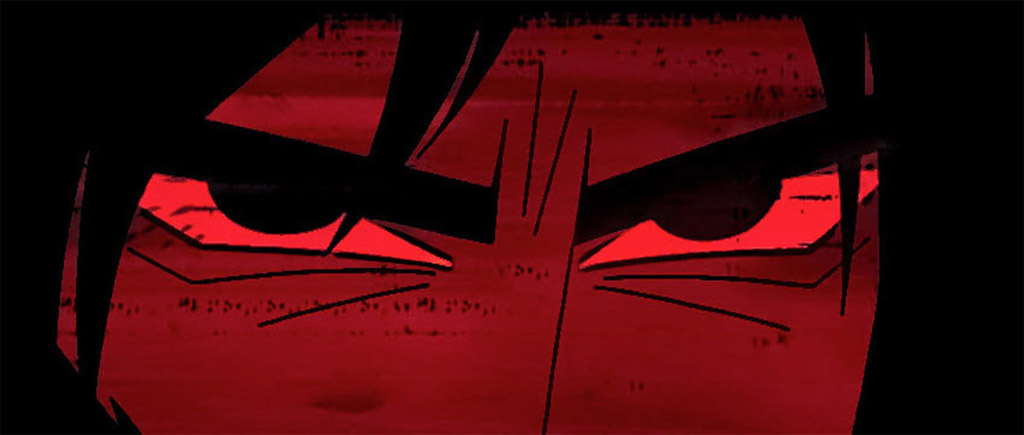
Predatory gaze of Samurai Jack.

The mindset of a TSYR practitioner should be that of a predator. Patiently hunting the opponent, pressing for an advantage, waiting for a mistake to occur. When an opening presents itself move in without hesitation and finish quickly. Many of the kata we were working on involves the uchitachi initiating AND finishing the kata. The initial movement must not alert the uchitachi of the attacker's intentions and then, once started, the job must be finished quickly and precisely with certainty.

We worked on getting intent into the movements, not just going through the motions. It was very much a session of study and critique. Very enjoyable but a different pace from the morning.


Thursday, 14 August 2014

Polishing the Mirror.

When polishing the mirror, one is refining technique. You have the big dots connected. You know the basic look and shape of the kata. Now it is time to dig deeper, study further.


Recently our new sensei (Chris) came back with another member of the club from a two week intensive training session with Toby Threadgill. What he brought back were subtle tips and pointers to further our understanding of each of the kata in the Shoden Mokuroku (first level of the curriculum). Each time we get together for training, sensei is going over some of these tips.

I am finding these training sessions very enlightening and exciting. We remarked with one another how we had been over-thinking some of the techniques. Now they seemed simpler but more effective. However, these tips would be meaningless to someone new to the martial art. There is assumed knowledge in these new pointers. It is refinement of our current technique. Someone completely new would take the advice in the wrong way or simply not know what it meant.

Bits of the puzzle are starting to fit together for me now. Certain principles keep appearing throughout the different sets of kata. Some movements are similar. Others that appeared similar are now obviously different and teaching a different lesson within the same set. This seems logical. Why have two kata teaching the same thing in the same set?

As a group we are entering an interesting crossroads where we have the step by step instructions for beginning students but we are moving forward with our own training and Toby is refining what we do. Sometimes Chris would ask Toby which the right way for doing a technique was? This or that? Toby would say both. One is how it is done for beginners, the other a more advanced version.

Chris was able to go through the entire Shoden syllabus while away, refining, questioning and adapting. So far we have looked at the first kumitachi set, the sword disarms and defence against sword disarms. I had to miss one other session due to family commitments.

I look forward to the next training session as he goes over more of his notes from Hombu.

Wednesday, 6 August 2014

Training the Right Way

I walked away from training today thinking about the experiences I had on the mat that day. Then I stumbled upon a blog by Budo Bum and he was speaking about training right. He speaks about training hard but only as hard as your technique can handle. The balance between training with intensity and training slow enough to keep the technique correct is difficult to achieve.

Too much intensity can turn to thuggery.

If you train with high intensity too often your technique can get sloppy. In TSYR, ideally techniques are done in a relaxed manner so not to telegraph your intentions. If you try to force techniques and tense up in the process this is counterproductive to what you are trying to achieve. The end result is that your opponent notices or feels this tension and responds accordingly. At greater speed and with stronger intention both from the attacker and the defender's viewpoint, these subtleties can be lost. In extreme situations it begins to look like thuggery as one or both training partner's lose their centre and overbalance at certain times through the kata or technique. Techniques get cranked on without awareness of body structure and the lesson is lost and increases the chance of serious injury in the dojo.

However, doing the kata slowly and deliberately all the time can have its down side. People start to get a false sense of their abilities. Yes, you maintain structure, yes you move from your centre, yes you create kuzushi but always when things are moving slowly. If the situation is hyped up this can all fall apart very quickly. In this situation people who think they are competent suddenly get a wake up call when someone comes charging at them REALLY trying to strike them. Often people freeze up or find their technique too weak or they switch gears to "force mode" and try to muscle the technique on.

So my point is to try a graduated approach to training. Both styles of training have their purpose but the middle ground must be obtained. A good sensei is one who can see where a student needs to be to be challenged enough for growth but not so much to push them over the edge and allow them to fall back on bad habits.

In our dojo after practising some kata for a while, slowly and deliberately, we do a more free style form of practise. We decide on three to five responses we will use against certain attacks and then have the partner attack quicker and harder than usual. We do not stop to correct mistakes or spend time discussing points. We receive five and then give five attacks. After that set we might stop to discuss points but only then. This allows us to see the holes in our techniques and truely see what parts of the kata have been internalised.
It is important that both partners know what is going on here. Uchitachi should be relaxed and pliable during this process but at the same time, if kuzushi isn't made, then uchitachi will not fall. This is not the time for uchitachi to become wooden and resist every movement as this is unnatural and relies on a certain amount of anticipation of what technique is coming. This will not teach shitachi anything. This relates of course to the idea of uchitachi being in a teaching role.

After this exchange we may change partners and do it again. Different body types add another dimension. After doing these sets a few more times we have now given ourselves plenty to work on when we go back to slow and steady next time in class.

The idea is that over time it will take faster and harder attacks to undermine our technique.

Yours in training,
Dean.

Saturday, 15 March 2014

Working the kata or am I?

Some interesting things have been happening in my training lately. For a long time I thought I worked the kata but lately I am beginning to think the kata also work me. Let me explain.
There is a sword kata where I am dropping down into my front leg. However, there is no drop when done correctly. After talking this through with sensei it has become apparent that my hips are not square from the beginning and to perform the technique with the right structure I am dropping into my front leg which results in me squaring my hips.
Another example is during batto (sword drawing). Near the end of each kata the hips should be square and for a long time I was straining my left ankle during training. I finally realised that I needed to square my hips by moving my left foot out to allow room for the hips to open. No more pain in the ankle while I train.
A final example is during the taijutsu kata. Moving about the spine is important for TSYR movement and over time I am finally feeling when I am moving into a posture of imbalance so I self-correct.
In all of the examples above the constant repetition of the kata have changed my positioning or body posture along the way. As the principles of the art embed themselves in my psyche my body is automatically correcting small things I am doing wrong. It is exciting.

So I really feel the kata working me the more I try to work the kata. Weird.

Thursday, 31 October 2013

The Long Slog Ahead...

I'm reflecting on the training I had last night. Sensei had me partner up with another member of the group to work through a set of kata involving the sword vs. O-tanto (large dagger). I had never done these techniques before and I'm the first to tell you my sword skills are probably the weakest of my TSYR skill sets.
Can you imagine facing a swordsman with your tanto hand outstretched as an obstacle. It sure doesn't feel safe at all. The shitachi needs very good timing and entering to make the techniques work. Add to that how tired I was last night and you get to see that the session ahead was demanding.

Its one of those moments when you tell yourself that this is what I signed up for in a koryu. Sometimes training is just hard. In that situation I was the weakest practitioner and had the most to learn. I felt incompetent and frustrated with myself at times. There is a long road ahead. Constant practice is the only thing that will allow me to progress along that road. This was only one kata set of many at this level of the curriculum. It is mind-boggling to think how we are going to practise all the different kata we know enough to progress. There doesn't seem to be enough time outside of family commitments and work. However, this is what I have signed up for.

Despite what I have written above. I count myself as lucky. Lucky to have the opportunity to study a koryu in NZ. Luck enough to have an outstanding martial practitioner as my sensei and lucky to have great training partners.

So, back to the mat and back to training.

Dean.

Monday, 15 July 2013

Keeping the momentum

Over the last little while my TSYR group has steadily improved our knowledge of the shoden kata. We all pretty much know the basic form of each kata. Now we need to look a little deeper and start to improve on this foundation.
This got me thinking about maintaining the drive and motivation to train. In TSYR the curriculum is very large so there is always the excitement of learning a new kata. However, how do we keep the ones we have already learned fresh?
Here are some things our group has been trying:
1) deviate from the form slightly. If the kata is set using a single hand grab, how would we complete the technique from a punch? This challenges the practitioner to problem solve but stay true to the principles of that kata. We do this slowly and deliberately.
2) semi- freestyle practice. Allow the attacker to throw a punch, single-hand grab or double hand grab. The recipient must then perform one of the set kata. This can happen slow or fast. It checks how many of the kata have become internalised. If a punch is thrown or your hands are seized and you freeze...what good is your technique?
3) faster! Perform the set kata with more speed and more smoothly. Move past, the paint-by-numbers mentally that we all must start with. Trying to go faster often exposes holes in one's technique.

All of the above are only useful if the practitioners have a reasonable grasp on the basic kata. Complete novices would be confused and it would slow their progress, not improve it.

Of course, the best thing you can do to keep motivated in your training is to always self-critique. Have I got my balance? Have I taken my partner's balance? Am I keeping good body alignment/structure throughout the technique? Am I safe to move into that position? and so on and so forth.

Keep training!


Thursday, 20 June 2013

Tetsubo, iron fans and pointy things

The samurai were a walking arsenal of weapons. Not only did they carry a long sword and a second, shorter blade (wakazashi or tanto), but they would most likely have on their person a variety of other, smaller back-up weapons.

My instructor has recently returned from Colorado where he has been taught a range of new kata. One such set of kata concentrate on the use of the tetsubo (iron bar) in combat. This bar is approximately 1 foot long and may or may not have a curved extension on it like a half sai. The kata are very direct and brutal with target areas being the neck, ankles, knees and head. In some cases I believe the iron fan can be substituted for the bar. Last night for our Wednesday training we were taught the 5 kata concerning these secondary weapons. The tetsubo/iron fan was worn on the opposite side to the swords and used used in times when the sword was not accessible for whatever reason.
Another weapon of the samurai was the metal implement tool, it basically looks like a really sharp chop stick and was used for a variety of things outside of combat. Of course, being practical types, the samurai learned how to defend themselves with such a tool. I have yet to see the kata associated with that weapon.
I am really enjoying not only seeing these techniques demonstrated but also participating in the kata. It is becoming obvious where similar body movements and principles are overlapping from earlier kata I have been taught.

This is an exciting time to be in TSYR and with the news that Toby Threadgill will be travelling to NZ in December with two senior members of the ryu it can't get any better, can it?


Sunday, 10 March 2013

Putting Spirit in Sword Kata

Morihei Ueshiba and son.
I'm reflecting on my Saturday training session. We covered many facets of TSYR. Ukemi practice, body throws, some very old, technical kata and finally batto (sword drawing) and sword kata. As I don't yet own my own sword, I was paired up with the only other guy there who was swordless and we practised kumitachi with bokken. We worked on the two sets from the Shoden level. We know these kata well now so we are now trying to refine them, refine them and refine them some more. One aspect we were working on is investing a stronger presence or spirit in our actions. When both people are deeply invested in the kata this creates an almost tangible tension that locks the two together. When the kata finally finishes, I feel a sense of relief or calmness as the tension falls away. It is incredibly meditative. 
I recently read that the key is to ensure that our training is intense enough is to encourage enough risk that we feel challenged but not overwhelmed. By providing a strong fighting spirit for our partner to deal with we help hone their edge. The difference between someone who is just going through the motions and someone who is fully invested in each moment is marked! The idea is to consider each kata a life and death scenario where you are looking for an opening in the other person's defences. There should be a feeling of pressing your opponent at all times, even when you are taking the role of the 'loser'. In this way you both develop and become stronger budoka for the experience.

Wednesday, 30 March 2011

Substance.

I'm tired. On a Tuesday night I start a martial arts sojourn. At 4pm I teach teenagers aikido until 5:30pm. Then I drive to my own aikido training, 6pm - 7:30pm. I then throw down some high energy food and drink and drive to my final training location for the night. 8:30pm - 9:30pm Takamura-ha Shindo Yoshin Ryu training.
As my night progresses, the training gets more difficult as I get more tired.

The subtle nature of TSYR training is difficult to grasp in a tired state but I also realise I am learning something new every time I step into that dojo. Last night I was shown the first two kata of the second sword kata series.
I'm still trying to get the simple mechanics of the movements and the internal power is not happening. Due to this my movements have no substance. One of my training partners said he had to pull back on his tsuki as he could feel that he was going to thrust straight through my defence even though I was doing my best to defend myself. I know in time as my confidence builds, I will be paying more attention to how I am powering my movements. In the meantime I will continue to have no substance, like a shadow of myself on a martial sojourn, every Tuesday night.

Bring on Saturday!

Monday, 28 March 2011

House of knives!

Saturday training was a blast.
We concentrated on just a few of the strengthening exercises and then got straight into some techniques where both opponents are on their knees. Some of it was very aikido-esque and it made my life a little easier. One technique are pretty much yonkyo.

After that we trained in tanto work. Now, the techniques taught in this martial art are nothing like what we do in aikido. They are nasty, nasty techniques, most have the neck as their target. I really enjoyed the effortless way that the knife winds around a limb or torso. Scary stuff! All the other practitioners have been studying these techniques for a while so they had plenty to teach me. I was taught five kata where both opponents have a knife. The person that receives the attack (and ultimately wins) holds the tanto in a reverse grip. There are five more kata where the tanto is held in a forward (normal?) grip. I am yet to see those.

What I am really enjoying about TSYR is how all the principles are clearly taught and applied in each kata. Be it a sword, tanto or unarmed. There is a consistency and martial viability that is lacking in some aikido.

I am also enjoying my aikido training in that, the body movement principals I'm picking up in TSYR are translating nicely into my aikido.

I can't wait until tomorrow (Tuesday). On this night I teach aikido to some teenagers at my school. Then I drive to my own aikido training. Finally after that I have one hour of TSYR training. A full but extremely exciting night.

Friday, 18 March 2011

Live sword!

The sword kata continue but I have had the opportunity to draw a live sword and strike with it!  Wow, there is nothing like a live blade to hone concentration. It is true what they say...putting the sword back into the saya (scabbard) is the hardest bit. I even managed to cut my finger with the steel point.

We continue to train with the paired sword kata and I now know the five kata from the first set. Knowing them, of course is one thing, knowing them well is another story.

In my own time I am practicing the internal strength exercises that will lead to a coordinated, strong body for budo. Some of the exercises are very challenging and I'm still trying to work out how to do them correctly.


It will take years before I feel I'm on top of this stuff.