Sunday, 27 November 2016

Theory versus Practice.

The cycle of learning is an interesting one in Martial Arts training. On the surface, an instructor explains or shows a technique and a student tries his or her best to copy. This sequence is repeated time and time again, over this time the student starts to learn these techniques and perform them without guidance.


Sometimes there is an aspect of the technique that the student simply fails to do correctly. The instructor then patiently explains what he is expecting the student to do. Maybe he uses an analogy to help describe the positioning or movement. The students attempts to do the technique again and is still stuck on the same point. 

Sometimes the student understands what is being asked of him or her but still does the technique incorrectly. They struggle to take what they know and express it with their body. 

This idea of 'knowing' but not 'doing' has occurred with me many times. Even when I am absolutely sure what I am supposed to do, I can't get my body to do it. It can be very frustrating. Eventually, at some point the transition is made where finally after many attempts, hours, days or months later I can finally do the technique the way my instructor wants it done. So what is happening?

Well to start with it could be a neuromuscular phenomenon. I might not yet have the coordination to move those particular muscles in that particular way. So I see my sensei do a technique and I monkey it. However, my version doesn't look the same. I haven't got the same coordination as my sensei so my muscles may fire in a different sequence or even the slightly wrong muscles fire to achieve a similar outcome. 

Some of the biggest changes to the neuromuscular system occur during tasks that require explosive movements or when muscles are put under high loads. This sums up a lot of budo. Neural pathways linking to target muscles become more efficient at transmitting the message. As motor units send the stimulus from nerve to muscle, more and more often, the better they get at it. Messages don't get sent to the wrong muscles en route and messages also get to their target muscles with increasing speed and less delay. 

The martial arts often talk about the mind-body connection and this is what I think they are talking about. You have in your mind the movement (theory) and you attempt to make your body do it (practice). 

The world of theory seeks understanding while the world of practice simply wants to act. If all a martial artist does is sit in his arm chair and reads all about the concepts found in budo then can he call himself a martial artist? On the other hand, if the martial artist simply starts kicking, punching, and throwing without instruction, how does he know he is even doing things correctly?  
We must try and find a balance between the two. 

Discussing these two ideas, theory and practice reminds me of something I read once. This was about the way Japanese teach and learn martial arts and how westerners teach and learn. The traditional Japanese method involves little instruction from the sensei. He will show techniques then ask the students to do them. He may say "No, not like that, like this." and repeat the movement. But no further instruction. A whole lesson may go by with the student being told, "No, not like that, like this." The student diligently repeats a movement over and over, hoping to capture the technique of their sensei. There is not a lot of talking in this kind of dojo.

A western instructor (and student for that matter), talks more. He or she will show the technique, answer questions from the students and talk abut why a technique is done a certain way. Students will try the technique and stop and ask more questions. The sensei will try different ways to explain what is happening. 

Both methods have their value. You could argue that the Western method is more theory-based while the Japanese method is more practice-based. Is one better than the other?  I don't know. I believe that we could talk less in some western dojo and perhaps Japanese instructors could take the time to explain things further. 

The danger for any martial artist is losing the balance between theory and practice. When I am on the mat I am conscious of the amount of time I spend talking about a technique rather than simply getting on and training. You can talk all day about how to place your feet or get the right positioning, but it is sometimes better to just get on with the training and work it out. One thing that can come out of the Japanese style of training is how observant the student becomes. As they cannot rely on the sensei so much for instruction they tend to look very closely at what he is doing. They pick up things that a western mindset might not. 

If you spend too much time trying to make a technique work and not listening to your sensei then you have another problem. Your training will venture off course and what you end up doing is not what your instructor asked you to do. You will lack the understanding behind why the technique is done that way and may hurt yourself or training partners accidentally. I know some stories where good martial artists are asked how they do something and they say "I don't know, I just do what my teacher did." This is no problem for that student but the martial art suffers because that person will struggle to pass on the art in any depth. 

TSYR is a funny beast as it tends to attract intellectuals. I'm not sure why, maybe its the history and culture associated with it, maybe its the complexity of the art itself. What ever the reason it is easy for some people to become too academic on the mat and try to think about the movements too much. Theory creeps in and tries to make a home. 

Even the most accomplished martial artists must continue to put theory into practice. I once asked my past sensei, Robbie Smith what was the key to ongoing training in the martial arts and he said, "Find a source." He was saying that you need a teacher to set the standard by which you can follow and keep training. This avoids your training straying. He was bothered by people who taught martial arts but never trained for themselves anymore. They would run a class, speak at length about the philosophy of the art, demonstrate the technique then let the students train. These teachers had let the balance tip heavily towards theory and had almost given up practice. 

So where do you see yourself on the continuum between theory and practice?


Sunday, 20 November 2016

Latest musings - Family, work and training.

Below is a picture of the kamidana of my private dojo. I finally finished putting the shelf up. 


It has taken a while because work and family always come first. So when I get the chance, I go out to the dojo and work on the current project. For a while it was the shoe rack. I put together some old shelves, sanded them and painted them. Now I have a shoe rack in the area which will be the genkan eventually. 

I had the shelf for the dojo made for a while but the brackets were being made as a project by a young man at the high school I teach at. They were eventually finished and then had to be stained to match the shelf. Just staining the brackets took a while because the oil-based product needed 24 hours between coats. I would try and get some of the staining done in the evening after work or in the weekend and sometimes it would be two or three days before I could get back at it. 

Once the brackets were done I wanted to buy brass screws (I eventually used zinc gold) to match the colour of the brackets. I had to wait two weekends before I had the chance to get to the local hardware shop. Visitors and family kept me busy until then. I eventually had to tell my wife that I wouldn't be going on the latest family road trip just to get time at home to drill the brackets and shelf to the wall. 

The whole off-mat area is still awaiting my attention. It is functional but the walls need lining and most surfaces need a paint job. The matted space is functional but small things still need some work. I have to decide how I am going to finish the floor space that borders the mats, at the moment the plywood flooring is still exposed 

I'm not complaining, work provides the money for the projects and family comes first. I just accept that things get done in the dojo at a slow plod. As long as I keep making progress I'm not too concerned. 

Training in TSYR continues as always. The core group are still at it and I never tire of it. The Hamilton dojo will be closing for renovations in December and I have said I am happy for the TSYR group to come out and train in Te Miro. I'm looking forward to sharing the space with them. I can practice batto in my own space which is a bonus but I need bodies to work with for most of the shoden curriculum. 

Since Threadgill sensei's last visit to NZ we have been going over the key points he mentioned. I know for myself I need to be less passive in my sword work. We all need to work on smoothing out our unarmed techniques so that they flow more and establish a connection with our partner earlier to get control as quickly as possible. 

It is all good for the mind and body.

Sunday, 9 October 2016

Training in the Hills

I recently had the honour of having my instructor, Chris come out and train at the Te Miro Dojo, my private dojo on my property. He came out with Pete and asked me to set the structure of the class. I took the three of us through warm ups and then Nairiki no Gyo. Then we spent most of the two hours working through the five idori kata that have recently been placed in the Shoden Mokuroku. We hadn't practised them for a while and we were rusty. The guys appreciated the softer mats I have at my dojo. The Hamilton dojo has hard puzzle-mats and although they are on a sprung floor, it doesn't help much when working from our knees. In the last half hour we worked on the standing Uchite set. 

Pete (left) and Chris (right) at TSYR hombu with headmaster Toby Threadgill.

It was a fine spring morning with nice views of the hills and native trees. Great training with good men. Afterwards we popped down to Cambridge for a light lunch before going our separate ways for the weekend. Its times like these that I am reminded of what great friends I have with the TSYR people. It was my perfect morning.

Friday, 30 September 2016

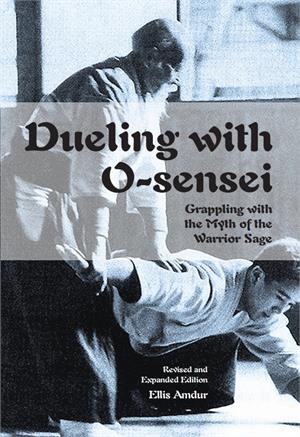
Dueling with O-sensei: Book Review

I was first introduced to Ellis Amdur's writing many years ago when I read the article "Hiding in the Shadows of the Warrior" that had been put up on Koryu.com. That article had a profound affect on me and fueled my interest in koryu budo. I scanned the Internet reading anything I could of Amdur's concerning martial arts. In time I read reviews about his first edition of Dueling with O-sensei: Grappling with the Myth of the Warrior Sage but never got the opportunity to read it myself. Just recently I have finished reading his revised and expanded edition.


It is a book made up of essays that are grouped into chapters following a particular theme. There is so much in this book that I'm not even sure how I'm going to tackle it.

I will start by giving my overall impression of the book. This is one of the best books I have read on the Japanese martial arts. Amdur writes honestly and with conviction, not only about his experiences with martial arts but on the human condition as well. What makes the book so compelling are the personal accounts from the author and how he links them to Japanese concepts. Amdur doesn't shy away from showing peoples' faults including his own and I think it is this quality that helps the reader  reflect on one's own actions and motivations for being in and around the martial arts. 

As with Old School, I will break the book down into chapters and try to cover main themes. There are 23 chapters in the book so at times I may combine some of them simply due to the amount of content that the book contains. 

Chapter 1: The Knights of the Mouldy Rope. 
Amdur talks about his introduction to Aikido and Terry Dobson. The majority of this chapter is about Terry and who he was as a man and his profound influence he had on the author. It is a great piece of writing and I thoroughly enjoyed it. 

Chapter 2: Ukemi from the Ground Up.
This chapter discusses ukemi (receiving body) by taking us through the role of two people training and how these roles have changed over time. He discusses taking ukemi in the context of classical budo and then how that changed in Kano's Judo. He discusses Daito-Ryu and Aikido and how the roles in the training have changed again. Overall Amdur appears to be saying that Ukemi is different things in different contexts. 

Chapter 3: My First Days at the Headquarters Dojo. and Chapter 4: The Best of Their Time.
Here Amdur tells his experiences at Aikido's Hombu Dojo. He writes about his experiences meeting the Doshu of the time, Ueshiba Kisshomaru and his son, Ueshiba Moriteru. The fourth chapter gives Amdur's perspective on a number of high level practitioners of the time; Osawa Kisaburo, Arikawa Sadateru, Tada Hiroshi, Yamaguchi Seigo, and Nishio Shoji. The author gives the reader a personal insight into the character of these men. 

Chapter 5: Forever Young.
This chapter centres around Kuroiwa Yoshio. A man Amdur obviously has a lot of respect for based on his writing. 

Chapter 6: A Conversation with Daito-ryu's Other Child. 
Here we read about Hapkido and its relationship with Daito-ryu and Aikido. 

Chapter 7: Atemi: Striking to the Heart of the Matter.
Amdur writes a small chapter defining atemi, what it is and what it means for aikido practice. 

Chapter 8: Did You Ever Meet O-sensei? O-sensei Who?
O-sensei, defined as great teacher does not always mean Ueshiba Morihei, founder of Aikido. Amdur gives some great examples of people that could be referred to as 'great teacher'.

Chapter 9: Tenchi: Head in the Clouds and Feet in the Muck.
This is a fascinating chapter where Ambur attempts to debunk the Myth of the Warrior-sage, Ueshiba Morihei and tell the man's story as it really was. It is a large chapter but well worth the read. Anyone who practises Aikido should read this chapter. It is eye-opening and makes a lot of sense. Earlier publications by other authors paint Ueshiba as almost god-like. This chapter treats him like a normal man who finds himself in extraordinary situations at times. 

Chapter 10: Toward Simple Morality - Or How Come Something So Fine Sometimes Turns So Ugly.
Here Amdur tackles the topic of abuse in the martial arts. Sexual abuse of children, physical abuse of students of any age and abuse of trust. Aikido in particular lends itself to physical abuse due to the junior-senior relationship set up in the dojo. Amdur's expertise in dealing with this issue is obvious in his writing. It is a tough chapter to read through and sickening in places as the author mentions cases where such abuse has occurred. Despite the content, Amdur's honest writing makes the reader think and reflect on their own practise. One line stands out for me in particular, "Be careful with whom you choose to study. You will become who they are, and if you haven't chosen wisely, you'll suffer and other people will, too." 

Chapter 11: Otoko (Manhood)
This chapter discusses what it means to become a man, in the Japanese context. It is perhaps a way to understand why some interactions in the dojo are set up they way they are and why it can be confusing for Westerners to understand. Amdur compares the Japanese and Western mindset and settles somewhere between the two. 

Chapter 12: Anyone Can Be O-sensei In One's Own Movie. 
This is a personal account of the author trying to be the hero of his samurai movies and discovering that he should stick to fighting his own battles. 

Chapter 13: The Ring is Where You Draw It. 
I'm not completely sure of Amdur's theme in this chapter. The collection of essays appear to be about taking the martial arts out of context. The essays are interesting and remind the reader that the lessons you may learn (or not) in martial arts can be applied outside the dojo. 

Chapter 14: So How Tough Do You Want to Be When You Grow Up? 
This chapter discusses that old chestnut - which martial art is better? Amdur writes about how every martial art makes assumptions that fit into their particular training paradigm. This means practitioners learn how to fight within those parameters and get very good...in those parameters. So what does Aikido promise?

Chapter 15: Setsuninto-Katsujinken.
This chapter is a hard-hitting tale of making hard choices and living with the consequences. Setsuninto (the sword that takes life) and katsujinken (the sword that gives life) are ideas representing the use of the sword for malicious ends opposed to its use for protection of others. Amdur gives the reader a scenario that ends tragically and he had a say in the outcome. Not for the light-hearted.

Chapter 16: Hiding in the Shadows of the Warrior.
I have so many good things to say about this chapter. As I said earlier, this essay was the first piece of writing I had read of Ellis Amdur's and it encouraged me to continue to search for a koryu to train in. War and fighting is ugly, decisions must be made and ultimately you are left dealing with your own demons. It is a fine balance and often there are no perfect answers. 

Chapter 17: Aiki: A State of the Union. 
For me, Aiki is such a loaded  term and here we find Amdur trying to define it. Aiki has been interpreted in many ways over the years and Amdur's take on it comes from a second-hand quote from Ueshiba, "Aiki is a means of achieving harmony with another person so that you can make them do what you want." Another chapter I believe all aikidoka should read. 

Chapter 18: Aiki is Not Always Pretty.
This chapter is a personal account of the author's when dealing with an angry man with a gun. How does one de-escalate the situation so that the least amount of harm occurs?

Chapter 19: Cutting the Circle.
Amdur writes about irimi and tenkan and then, as he likes to do, adds a personal account to emphasize his points. 

Chapters 20, 21 and 22
In these short chapters Amdur looks at three Japanese terms; Musubi (tying together), Bushi no Nasake (warrior's compassion) and Kamae (stance). 

Chapter 23: Oniisan (Elder Brother).
This chapter discusses the author's earlier times in Japan while training and living with Kuwamori Yasunori. It is a tribute, really, to a man Amdur regarded with respect, in his own words he says, "I reflect how much finer a man he was than many of the pirates and rogues that I admired so much," 

At the back of the book is a comprehensive glossary of Japanese terms. 

As you can see, the book covers a lot of ground and although Aikido is much the focus of this book, it is the tales of people that bring it alive. 

To date, this has been the best book I have ever read on budo and especially, Aikido. Highly recommended. 


Saturday, 24 September 2016

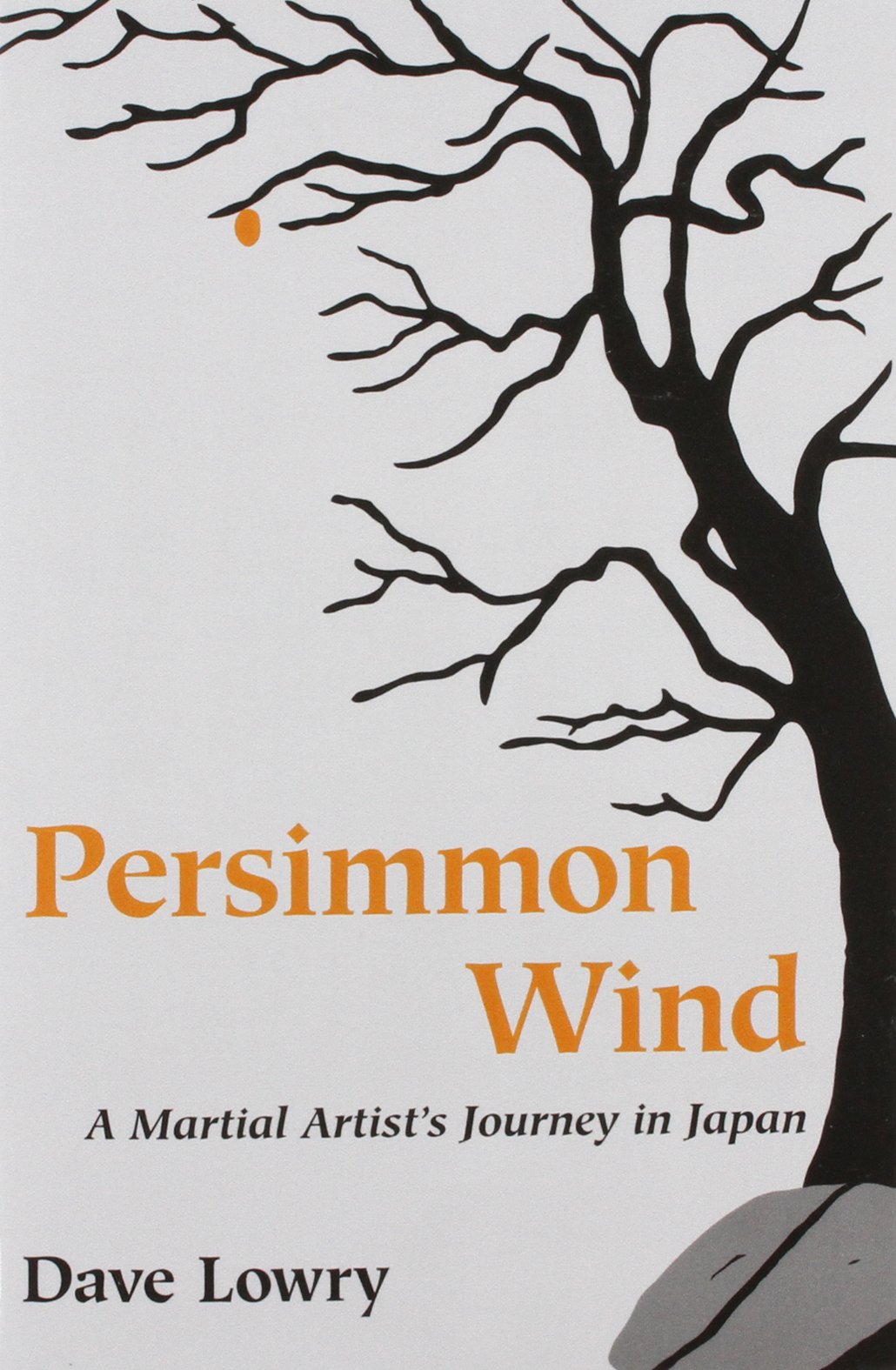
Persimmon Wind - Book Review

Persimmon Wind: A Martial Artist's Journey in Japan, is the first book I have read by Dave Lowry. It is not, however, the first time I have heard about this book. Anyone interested in koryu bujutsu will most likely know of Koryu.com. This website is a great place to find out about classical Japanese martial arts for the Western practitioner. It was here that I stumbled upon such authors as Dave Lowry and Ellis Amdur. It was the promotion of Persimmon Wind on the Koryu.com website that encouraged me to buy the ebook. What I didn't realise was that this book is the sequel to another book, Autumn Lightning: An Education of an American Samurai. So I suspect my perception of Persimmon Wind may change after reading Dave Lowry's prequel. For the time being I will give you my thoughts on the book as a stand-alone piece. 


The book is a mix of Dave's feelings and thoughts as he travels Japan entwined with stories of Yagyu Shinkage Ryu history and other idiosyncrasies of Japanese culture. The book tells of Dave's journey to Japan to continue training in Swordsmanship by reuniting with his sensei.  It is split into chapters with names such as, Glimpses of the Warrior, Obligations, and even Noodles and the Art of the Slurp. I found Dave's writing style a combination of direct story telling in some chapters while at other times he got quite poetic and esoteric. I'm not sure what I was going to expect from the book but I felt he didn't really dwell on the actual training of Yagyu Shinkage Ryu. He would mention it in passing while moving onto another historical account or Japanese cultural quirk. Perhaps this was his aim; to give the reader a feeling of living in Japan as a foreigner and give an introduction to some ways of the people there. 

What did I enjoy the most?
 His personal accounts were great to read about. The realisation that his Japanese was deemed, rather old-fashioned. The fact that a young Japanese boy knew more about baseball than he did (as an American), even a story of how the locals discovered that this crazy American wore old-style, traditional Japanese underwear!  
I also enjoyed his telling of the relationship between himself and his sensei, including his sensei's family and neighbours. Dave managed to capture the characters of the people with simple descriptions. For a practitioner of a koryu bujutsu Dave emphasised for me how important it is to the Japanese that they know the roots of their art. This especially reminded me that the elements of Shinto and Buddhism are part and parcel of studying the art as much as swinging a sword around. Dave visiting the grave of the founder of Yagyu Shinkage Ryu and his sensei's brother highlighted the importance of such acts and gave me an understanding into the importance of my own Ryu's ancestry and why Threadgill sensei has traveled to Japan to visit graves and living members of the Shindo Yoshin Ryu line. Dave successfully tells how deep and rich Japanese history is and that these koryu both he, I and many other Westerners practice are very, very old and entwined within the fabric of Japanese culture. 

What did I not enjoy?
At times Dave's story-telling feels long-winded and a little boring. A few times he is describing a visit to a certain place in Japan and I am intrigued until he slips into a retelling of Japanese history or similar which carries on for quite a while before he gets back to the point at hand. His obsession with traditional Japanese culture is sometimes a bit too much. Does a Westerner really have to wear archaic Japanese underwear or sleep on a futon in his American home to be fully immersed in his koryu training? 


Overall Impressions?
The book gave me insights into rural Japan that I may not get the opportunity to experience myself. This in itself is valuable but Dave also managed to convey the richness of koryu study and how it is an ongoing pursuit that goes beyond clashing bokken together. This book is not for everyone but if you practice the classical martial arts (and I know many of my readers do) then I recommend this book (maybe after reading Autumn Lightning).  

Wednesday, 7 September 2016

The Bar is Raised.

I have recently finished two full days of training (approximately 6 hours a day) with Toby Threadgill. He was back with us, here in NZ and was in top form.
I managed to train both Saturday and Sunday, but there was a Friday night open seminar and  more training on the Monday for those who could take time off work.

So what was the training like?  Well, those attending were members of TSYR. The Hamilton dojo members were the most experienced with the Auckland study group joining us. Threadgill sensei was in good spirits and was showing some great stuff, his expectations of us were high. 

Saturday morning session was dedicated to Tachiai Kansetsu Waza - Katate. Sensei gave some great tips on how to refine our technique. I found this training to be a mixed bag of experiences. If I ended up practicing with one of the less experienced members of the group then I felt I ended up teaching more than refining my own technique. If I was partnered with someone of experience then I could really explore some of the ideas sensei was suggesting. Either training helps improve the quality of the students in general, so I didn't mind. 
The afternoon session started with batto (sword-drawing). This training is tough because Threadgill sensei wants precision in these techniques. It is a matter of repeating movements over and over again and adjusting small sections of the draws. Sometimes by millimetres. It was only the second time I had even been tutored by sensei directly about my batto and it was great. 
After critiquing our batto, sensei asked us to move into the first set of the Shoden kumitachi. He asked myself and one other person to demonstrate each kata before critiquing us and then letting the rest of the class practice. I can tell you that it is a very humbling experience to be asked to demonstrate a technique knowing full well that everyone is watching and sensei is most likely going to find fault in what you are doing. 

Sunday morning saw us back with the Tachiai Kansetsu Waza. This time the Gyakute set. I really enjoyed the tips and advice sensei gave for these techniques. I came away feeling like I had made improvement on many of the techniques. I am finally getting to a point in my training that I can make the corrections sensei asks for sooner than I used to. My body control is much better and my structure is improving. 
After lunch it was onto a further two Batto techniques. Again, sensei has a very high standard when it comes to sword work and we were pushed hard. 
Following the sequence from the day before we moved into kumitachi and sensei put me and the other guy back in the spot light. The second set has some very difficult techniques and we were beat on about those ones. 

Despite the high level of training, I remember some positive moments. While practising our sword cuts, sensei spotted me after one particular cut and said "Dean, that was OK." Believe me that is good praise from sensei. At the end of that afternoon sensei also said to us that "you are starting to look like swordsmen."  Again, high praise, coming from sensei. 

When Threadgill sensei visits it is an opportunity for him to see us improving as a group. It is important that he can see improvement and that we are not wasting his time by inviting him out to NZ. I believe he is happy with our progress and we now have 6 months to put his recent advice into place and improve some more. I felt that he really started to push us this time and he even played around with some freaky jujutsu from time to time, it involved advanced sensitivity and body mechanics. That stuff is mind-boggling but inspiring at the same time. One thing he said more than once is that we needed to start adding flow to our taijutsu techniques. We had the 'big dots' so now we had to start putting them together in a smooth sequence. 

All in all he pushed us right to the edge of our abilities and that can only promote growth. 


Saturday, 13 August 2016

German Instruction

Today I had a fantastic training session. A member of the Takamura-ha Shindo Yoshin Kai, Jurgen Buchwald, was visiting from Germany. Jurgen is holidaying in New Zealand with his wife, Fusako and has managed to train at the Hamilton dojo for Wednesday's kenjutsu session and our Saturday taijutsu session in between sight-seeing. 

Jurgen in the dark blue.

I couldn't make the Wednesday training but witnessed his instruction and technique first-hand today (Saturday's training). First, let me say he is an incredibly nice guy. He is humble and polite with a ready smile. He started by saying he does not consider himself an expert by any means and what he was showing us today were simply his interpretations of the waza and underlying principles. Despite his humble introduction it was very clear we had plenty to learn from him. Jurgen has Shoden menkyo and has about 14 students in his own dojo but oversees other German TSYR groups as well. This makes him the senior most member of the Kai in Germany. With these credentials it was obvious to see why he was a great teacher and comfortable working with all body types on the mat. His waza is strong and clean. He concentrated on taking the 'slack' out of limbs to create the desired connection with uchitachi. His presence in the dojo was timely as he was able to affirm where we were going well in our training and correct mistakes. Threadgill Sensei arrives in three weeks and this was a nice way to check progress before his arrival. 

Two members from the Auckland study group had traveled down to train and had requested that they work through the katate set of the Tachiai Kansetsu Waza. It was great to see Jurgen's interpretations of these waza. His movement was precise and powerful. He patiently explained key concepts he thought were important to each kata and made corrections where necessary. The training during the session was positive and at a good pace. It was clear to see he was another level above our own training, his movements flowed through each stage of the kata and he mentioned that at any point shitachi should have control and have uchitachi at a disadvantage. In other words the first movement of the kata could finish the encounter if you wanted it too. 

After the session we went out for lunch before Jurgen and Fusako left for Rotorua. It was a privilege to have had the opportunity to meet another member of the Kai and take some points away from training today.