Showing posts with label koryu. Show all posts

Monday, 6 April 2020

What is koryu bujutsu?

Once work colleagues or people outside my close circle of friends hear that I practice martial arts the next logical question from them is, "What martial arts do you practise?"

I have found this hard to answer. I used to say 'jujutsu' but this would lead to people thinking I did Brazilian Jujutsu and was rolling around on mats and choking or tapping people out. Irritatingly, this is what most people think jujutsu is. So I changed my answer to 'an old Japanese martial art with swords'. This tends to get people thinking in the right direction but they started to think I was a ninja or samurai (eye-rolling at this point).

Lately (in the last two years or so), I have revised my answer once again. This time to, "I practice a classical Japanese sword art."  I like this answer for a few reasons. First of all, the term 'classical' indicates something old. It's very definition is that of being traditional or long-established. This is very true of koryu bujutsu. Secondly, it is of Japanese origin. Martial arts have many cultural backgrounds, I want the people asking to know that my tradition is strictly Japanese. Finally, I mention the word 'sword' so that they don't automatically think about the many empty hand fighting arts that come to mind when thinking martial arts. Even though my school does train without weapons, that is not our focus, so this is my answer. It tends to satisfy the curious while keeping true to what I do. If they have further questions or want an actual name then I will tell them that I practice Takamura-ha Shindo Yoshin Ryu. This is usually more than enough!  Just uttering that phrase tends to blow their minds. 

This line of thought triggered this blog post. I would like to go a little deeper into what is koryu bujutsu? Now, I do not read or speak fluent Japanese and my understanding is simply my own based on conversations with and reading by those that know better than I do. So, I do not claim to be an expert on this subject. I am simply, as always, writing down my thoughts on the matter. 

Let's start with looking at the word 'koryu'. The characters that make up ko-ryu can be read as "old" and "flow". Essentially, this refers to styles or traditions of Japan of a particular past time such as flower arranging, tea making, dance and of course the fighting arts. Therefore, I can't simply say I practice a koryu. It is too broad. Therefore, I can add the word "bujutsu", meaning "martial arts". So you could translate koryu bujutsu as old school martial arts. Now, the words bujutsu and budo can be used interchangeably and have a fascinating history in English interpretation. There are some lines of thought that classify bujutsu as martial arts that focus on combat effectiveness while budo are martial "ways" that focus on self perfection and morals. I believe Donn Draeger was the first person to place a difference on these two words. However, others have said that most Japanese do not see a difference between the words at all. Some old school Japanese practitioners will say they study budo.
Ellis Amdur mentions in his writing that one of his own Japanese sensei didn't like the word kobudo (old martial way) as to him it meant something fixed and dead, like an antique. This sensei preferred, instead, to say koryu budo (old flow martial way) - an art that flows from the past to the present, still developing and relevant to the world. 
I tend to use the term budo for my general practise of TSYR and aikido but if I am specifically talking about TSYR I will refer to it as a koryu bujutsu. I never say koryu budo. It just doesn't sound right in my head. Each to their own.

Amdur writes that the koryu bujutsu were established as entities that used combative practice as a binding force. Their purpose to teach the practitioners how to function perfectly as a member of the samurai (warrior class) under the leadership of the daimyo (feudal lord) whom the bushi served. To the modern observer it may appear that training in these old schools simply comprises of mimicking a preset series of movements called kata. It is far more than this. If we look between the lines at what Amdur has written we can see that at its heart, studying koryu bujustu demands loyalty from its practitioners. The ryu flows through its members (remember the translation "old flow") and when you sign up to be participant in one of these archaic arts, your individual wants or needs in your practice become second to the maintenance of the ryu itself. You are loyal to the headmaster and loyal to keeping the practice going into the next generation. Threadgill sensei discusses loyalty in "Shindo Yoshin Ryu: History and Technique." He mentions that loyalty should not be trivialised in a society where individuality takes priority. In other words, western culture. One must not let ego get in the way of real loyalty. The type of loyalty he writes about is not that of a mindless drone. More that of a thinking person who has made a conscious choice to be loyal to the ryu. Amdur describes this type of group loyalty as similar to a wolf pack. At first glance, wolves might play and frolic about but as soon as the leader prepares to hunt or perceives a threat, the whole pack is on the alert. They are finely attuned to the alpha's moods. Such is the case with koryu members who may appear to joke around with each other or tell stories before training begins. However, as soon as the sensei kneels to bow in, without a word, the casual joviality stops and everyone lines up ready for class. Immediate focus and calm ensues. 

I have battled with the balance of loyalty between my training, family and work for years. I have written about it from time to time on this blog. However, I have settled on this working paradigm for now - my family is first, my work is second and then koryu bujustu fills in the remainder of my time. I study a martial art so I can learn to use physical power to protect my family and others (family first). I work to obtain money to support my family (family first) and my koryu practice, therefore work needs to be second. However, once I have satisfied my needs for family and work, koryu training must be my priority. Let me clarify this. Having a drink down at the local bar is not as important as training. Binge watching a television series is not as important as training. Thinking "I can't be bothered going out to the dojo today" is not good enough. If I have time, I should be training. Now, training not only includes going through the physical movements of kata. It could writing my blog, reading one of many books on the subject I have yet to get to or cleaning and maintaining my sword. I can be practical about this. 

Right now, my country is in lock-down as it comes to grips with COVID-19. I am fortunate in that I can work from home. My children are home with me and my wife can also work from home. My daily routine supports my priorities. First of all I keep my family safe, we follow the health suggestions by our government and stay in our 'bubble'. We wash our hands well and only my wife is going out for essentials - family first. Secondly, I am a high school teacher so I am working from a digital platform for now. I make sure I am up-to-date with my work commitments online. Once they are satisfied I go out to my dojo and train for 30 mins to an hour depending on what I am working on, every day except Mondays. I give myself Mondays off from physical training - today is Monday.
I also read books about martial arts and write these posts. My mind is never far from TSYR or budo in general. 

My relationship with other deshi in the kai is quite unique as well. I cover these in more detail in this post. It is a very unique situation where I am part of an international community. 

So, that is my thoughts on this crazy obsession of mine.

Train safe and wash your hands.


Sunday, 4 June 2017

Is your Koryu training alive?

Welcome to my 100th post!

One of the exciting aspects I like about training in TSYR, is that there is so much to learn. The knowledge we gain is built upon layer upon layer.

At higher levels of training, TSYR students undergo force-on-force freestyle application of the waza. This ramped-up style of training requires some safety measures. The students fit themselves out in various types of armour to protect the face, hands and body. Most wear versions of kendo armour, but Lacrosse gloves, naginata kote and other protective hand wear can be used. A fukuro shinai is used (bamboo wrapped in leather) instead of the bokken. 

Takamura sensei believed that the art's core principles must be constantly challenged within the context and the assumptions the art was founded on. Freestyle training is one way to do this.   

Chris training in Colorado (courtesy of Threadgill sensei)

My teacher, Chris, has recently returned from an instructor's seminar in Colorado, USA. While there he underwent instruction in techniques wearing armour. While formal kata were taught he also experienced freestyle practice and has bruises to prove it. He had the opportunity to try some of the first kata learned in the school but with the knowledge that his opponent would come at him with more speed and power than normal. 

Chris noticed two things. First of all the ma-ai (combat distance) changed. With no hesitation to hit fast, people closed the distance quickly. However, to hesitate could get you hit even if you were the attacker. So both opponents worked closer to the 'edge'. The old samurai saying that one third of the time you would win in an encounter comes to mind. You can hit the other guy first and win. You and the other guy hit each other at the same time (mutual kill), or the other guy gets you. So you only have a 1 in 3 chance of winning. That is not great odds.

The second thing Chris noticed was that the kata as they were performed in the basic level change slightly. They smooth out (or the movements become smaller) and the timing of the movements may change. It is this change that explains why the omote versions are taught the way they are. They are teaching key principles and body movement. At speed, those principles and body habits still hold true. Chris could spot many of the omote kata in the more advanced kata he was taught.

The freestyle practice really took it up a notch. People could vary the timing of their attack, circle each other, yell, attack fast, attack tentatively, feint, whatever worked. The key to this training was keeping it within a few parameters to ensure the principles were kept intact. Otherwise it would just turn into a brawl.

It was great to see Chris so animated about his training and his enthusiasm was contagious. I'm sure he has had some insight into our Shoden kumitachi and that will be apparent in the next few weeks of training. 


Wednesday, 1 March 2017

Is Koryu Bujutsu a Cult?

I have been thinking about this one for a while. Koryu practitioners can be known for their elitism and secrecy, so I can see why some people might view involvement with a koryu as cult behaviour.

Amaterasu - Japanese Sun Goddess

So, let's explore the idea of a cult. A simple definition is a social group that is devoted to or worships a person or object. 
In a martial art where people believe there to be cult behaviour the sensei is often the object of the devotion or worship. This is easy to understand as many people come to the martial arts to learn from a teacher. Some people have watched films or read books about wise, old Japanese men who pass on their martial prowess to those who are worthy. They can sometimes come along to a dojo with the idea that they must prove their worth to the sensei. There is an instant power imbalance in this relationship. 

A clip from Napoleon Dynamite illustrates this nicely.


Now that was fairly blatant and as one of the characters says at the end, "Well, that was a rip off."

So if many people already believe they have to prove themselves to the teacher, this could lead to all sorts of problems. New students may tolerate behaviour from their teacher that may deem unacceptable in another setting. They may not be as ready to question their teacher's actions because they are being 'tested'. So this opens up an opportunity for a less-than-decent person to exploit the situation. Of course this happens in religion, public education and just about anywhere else where there is a teacher-student relationship. In martial arts however, we deal with violence. This is to be expected. So how this situation can be abused is concerning. Not wanting to veer off topic too much, the martial arts has its fair share of egomaniacs that use this medium to manipulate and exploit others, sometimes to a point of creating cult-like behaviour.  In fact my aikido sensei was subjected to this very thing early in his life and had to come to terms with breaking away from that toxic environment. So does it happen in koryu?  My answer?  I am not sure. I have not experienced it nor do I know anyone who has. But people being people, most probably, somewhere, sometime. 

I think what leads some people to generalise about koryu and claim they are all cult-like is some of the differences to the shinbudo (modern Japanese martial arts). Phrases such as "Your life belongs to the school" and "The school is more important than you" are thrown around when people argue about koryu being cult-like. 

The reality is you have an obligation to do what you can. We all have to keep our jobs and commit to our families, what time and money is left we dedicate to our training. Most koryu practitioners I know (not that many to be fair) are intelligent people who question things. They are not sheep. So I do not think they would still be students of a koryu if they thought they were in a cult. 

In my very limited experience, people teaching in a koryu are often no-nonsense types that are happy to accept people but not concerned if the student walks away either. They are there to train and pass on the knowledge of their own teachers to their students. It is not so much that what they have to teach you is secret or special its just that it took them a long time to learn what they know and they know what is required to get you there. So if a student is appearing flaky or trying to move quickly through the curriculum when they are not ready for it, the teacher must address this. This might make them seem cagey or grumpy or even 'secretive' if you like, but at the heart of the matter it is the simple fact that the student is not grasping what is being taught.

A sensei that is ambiguous about their training history is someone to be careful of. A koryu sensei will be up-front about the lineage of his or her school and who taught them, why wouldn't they?  They really have nothing to hide. Although asking these questions on the mat might not be the best time as they want you to train. However, off the mat, while out at dinner or over a few drinks they will happily discuss history and lineage and they will want to get to know you. Your character is important to them as you may be carrying on what they know in the future. 

Another aspect of koryu that lends itself to criticism is some of the archaic practises and rituals that the school may contain. Koryu have their roots in a different time period, when Shinto, Buddhism and Confucianism were very important to the people of the time. Students will participate in these practices to maintain a particular mindset or attitude but that doesn't mean we have to believe in all the hocus-pocus. For instance the utterance of a prayer to ask the martial spirits and ancestors to watch over our practice does not mean I believe that invisible spirits are watching me but it reminds me of the people that have trained before me and the respect I should have for the art while practising. 

At the end of the day I can say, faithfully, that I am not in a cult-like martial arts school. I am sure some exist but hopefully what I have written above clears up some of the ambiguity. 

Take care and keep training.

Dean.

Saturday, 24 September 2016

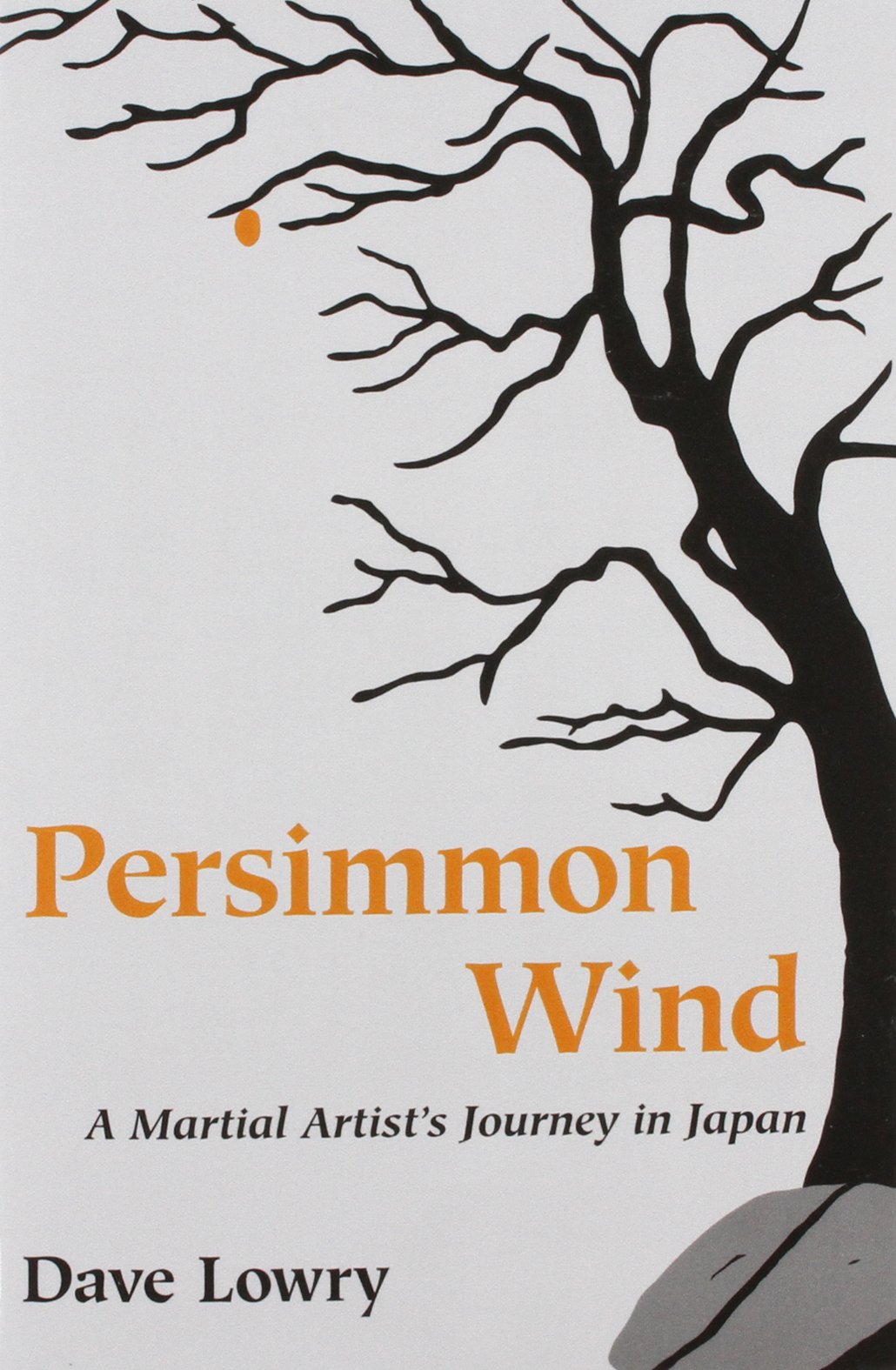
Persimmon Wind - Book Review

Persimmon Wind: A Martial Artist's Journey in Japan, is the first book I have read by Dave Lowry. It is not, however, the first time I have heard about this book. Anyone interested in koryu bujutsu will most likely know of Koryu.com. This website is a great place to find out about classical Japanese martial arts for the Western practitioner. It was here that I stumbled upon such authors as Dave Lowry and Ellis Amdur. It was the promotion of Persimmon Wind on the Koryu.com website that encouraged me to buy the ebook. What I didn't realise was that this book is the sequel to another book, Autumn Lightning: An Education of an American Samurai. So I suspect my perception of Persimmon Wind may change after reading Dave Lowry's prequel. For the time being I will give you my thoughts on the book as a stand-alone piece. 


The book is a mix of Dave's feelings and thoughts as he travels Japan entwined with stories of Yagyu Shinkage Ryu history and other idiosyncrasies of Japanese culture. The book tells of Dave's journey to Japan to continue training in Swordsmanship by reuniting with his sensei.  It is split into chapters with names such as, Glimpses of the Warrior, Obligations, and even Noodles and the Art of the Slurp. I found Dave's writing style a combination of direct story telling in some chapters while at other times he got quite poetic and esoteric. I'm not sure what I was going to expect from the book but I felt he didn't really dwell on the actual training of Yagyu Shinkage Ryu. He would mention it in passing while moving onto another historical account or Japanese cultural quirk. Perhaps this was his aim; to give the reader a feeling of living in Japan as a foreigner and give an introduction to some ways of the people there. 

What did I enjoy the most?
 His personal accounts were great to read about. The realisation that his Japanese was deemed, rather old-fashioned. The fact that a young Japanese boy knew more about baseball than he did (as an American), even a story of how the locals discovered that this crazy American wore old-style, traditional Japanese underwear!  
I also enjoyed his telling of the relationship between himself and his sensei, including his sensei's family and neighbours. Dave managed to capture the characters of the people with simple descriptions. For a practitioner of a koryu bujutsu Dave emphasised for me how important it is to the Japanese that they know the roots of their art. This especially reminded me that the elements of Shinto and Buddhism are part and parcel of studying the art as much as swinging a sword around. Dave visiting the grave of the founder of Yagyu Shinkage Ryu and his sensei's brother highlighted the importance of such acts and gave me an understanding into the importance of my own Ryu's ancestry and why Threadgill sensei has traveled to Japan to visit graves and living members of the Shindo Yoshin Ryu line. Dave successfully tells how deep and rich Japanese history is and that these koryu both he, I and many other Westerners practice are very, very old and entwined within the fabric of Japanese culture. 

What did I not enjoy?
At times Dave's story-telling feels long-winded and a little boring. A few times he is describing a visit to a certain place in Japan and I am intrigued until he slips into a retelling of Japanese history or similar which carries on for quite a while before he gets back to the point at hand. His obsession with traditional Japanese culture is sometimes a bit too much. Does a Westerner really have to wear archaic Japanese underwear or sleep on a futon in his American home to be fully immersed in his koryu training? 


Overall Impressions?
The book gave me insights into rural Japan that I may not get the opportunity to experience myself. This in itself is valuable but Dave also managed to convey the richness of koryu study and how it is an ongoing pursuit that goes beyond clashing bokken together. This book is not for everyone but if you practice the classical martial arts (and I know many of my readers do) then I recommend this book (maybe after reading Autumn Lightning).  

Saturday, 25 July 2015

What it means to be part of a koryu bujutsu.

I practised aikido for about nine and a half years. I was introduced to the martial art by a work colleague and thought I would check it out. I entered into training thinking that I would keep at it until life got in the way. I became obsessed with training, I was young, single and had time. During those years I met many people. Most of them through the dojo I trained at but also while visiting other dojo or at seminars. I enjoyed learning how to train with other people and found out how to persevere through my own limitations and frustrations. I struck up friendships but the members of my dojo felt like work colleagues. People that enjoyed the same interest as me. Some did become long-term friends but most did not. 

Aikido taught me how to learn a martial art. Then I entered a koryu bujutsu. 

The first difference is how I got involved. I was interviewed by phone by the sensei at the time and had to produce a CV of my martial background including past teachers (this was easy, one martial art, one teacher). I was invited to train but it was made clear this was a probationary period where I could walk out at any time or I might be discouraged from continuing. Finally, after about a year of training I was asked to take keppan (blood oath). This cemented for me how serious I was to take my training. Things in my life had changed. I had a partner and young children now. Time was at a premium when I was entering a more demanding martial art. The expectation is that I train as often as I can and as diligently as I can. Needless to say, I value my time on the mat. But one thing that I wasn't prepared for was how close I would become to my fellow training partners. Numbers in a koryu bujutsu dojo are small (I mean really small). In a modern budo a typical training hall might find 10 to 30 students training in any given evening. At our koryu dojo we have a core of about 10 students, with anywhere from four to eight training on any given day and our dojo is considered 'healthy'. This means I have got to know these other people very well. The head of our kai lives overseas but travels to New Zealand once or twice a year. Members from our dojo travel to hombu once a year for instructor seminars. Threadgill sensei knows each of us personally. He knows our families as well. For me, this is very different to my aikido training days. If I went to an aikido seminar up to 100 people could be on the mat. The guest instructor would most likely be from another country but didn't know you by name and certainly didn't know your family. You would take what you could from the lessons put forward by this person then return to your own dojo. Aikido, as with many modern budo is taught to the masses. Koryu bujutsu is not. It is much more personal. Genuine relationships are formed between teacher and student.

Takamura-ha Shindo Yoshin Ryu has lost two of its senior most students over the last two years. One was my dojo-cho the other was a senior student at hombu. If a well-known, high-ranking aikidoka was to pass on, it would be sad. Sad in the kind of way when a distant relative dies. When a member of a koryu bujutsu passes, it is like a close family member passes. Although I had never met the student at hombu, she was my senpai, she had entered the ryu before me, she had taught both of my instructors at some time or another and through them passed on her knowledge. There is a connection. People from my dojo who had trained at hombu had spoken about training with her, what she was like as a person and even shared notes she had made on techniques. There was only two degrees of separation between us. That makes it real, it hurts. Even as I write this I am astonished at how much the koryu bujutsu community means to me. I have friended TSYR members on Facebook that I have never met but we are a small community with a shared experience. We practice an old budo and there are not many of us, we are committed to its preservation. That brings us together. When a senior member passes, so too does their knowledge and insight. 

When my sensei passed suddenly, the messages and contact made from our international family was amazing. Robbie had traveled often and met many of those from the Ryu. Even those who had not met him personally had heard about him from someone in their dojo, again, two degrees of separation. We are a close group.

How the koryu is organised is different to aikido as well. In aikido there are many styles and organisations. The Aikikai can be considered to be an umbrella organisation that represents mainline aikido. No single person is in charge though. In koryu bujutsu there is one headmaster of the kai. In our case, Threadgill sensei. What he says, goes. Although he lets each dojo-cho manage the day-to-day running of their own dojo he ultimately decides which member is registered with the kai and who has to leave. Only him, no one else. If you don't like it? Tough. This actually helps create the close family feel of the group. The headmaster is mentor and teacher to all, almost like a father-figure. It certainly removes much of the politics that is found in large modern budo organisations.

Being part of this koryu has enriched my life. I have had to give more to this training than in aikido but I get more back in return. 

Training in a koryu bujutsu is not for everyone but for those of us that have taken the risk and made the commitment required it can be very rewarding. 

Sunday, 22 March 2015

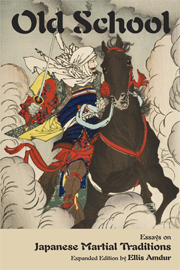
A Review of 'Old School' by Ellis Amdur.

I have recently finished reading Old School: Essays on Japanese Martial Traditions the expanded edition by Ellis Amdur.


First of all let me say that I have always enjoyed reading anything written by Ellis. He has a way of taking dry history and weaving it into a dramatic story that sometimes has a no-holds-barred feel about it. So I was very keen to start reading this book.

The structure of the book is divided up into five sections.
Part One: Something Once New
Part Two: Essays on Japanese Weaponry
Part Three: History and Tradition
Part Four: Nothing Stays the Same: Martial Traditions from the Edo Period.
Part Five: The Sinew of Classical Martial Traditions.

I will review the book by taking my favourite pieces from each of the five parts and highlight some things that stood out for me as a practitioner of a classical Japanese martial art.

Part One introduces the reader to some of the oldest koryu (old schools) still being practised today. The most famous perhaps being Tenshinsho-den Katori Shinto-ryu. The other two I had never read about before, Maniwa Nen-ryu and Higo Ko-ryu. Reading about these other two ryu encouraged me to have a look on Youtube and I found a nice clip of Nen Ryu and it was just like Ellis had described.
It is here if you are interested. Nen Ryu
Also found Higo Ko Ryu, keep in mind that Amdur's description of the ryu helps immensely in understanding the movements on the clip.

Ellis gives the reader plenty of information on the three ryu, including samples of the syllabus and key features of each ryu and the context in which these ryu were established.

The most outstanding passage from this first section of the book is how Ellis writes with such reverence about Kino Shizue, 14th generation headmaster of Higo Ko Ryu. Kino Sensei had just finished a shiai but one more opponent waited to one side to compete with her. The announcer had decided that enough time had been spent on 'old folks' matches and wanted to move things along. Kino sensei refused to move from the floor despite the pleas from the announcer and officials. She stood there silently.

Eventually Kino Sensei got her way and Abe Toyoko of Tendo-ryu walked out to challenge her.

The fight between these two ladies was not typical of shiai. They did not need judges to tell them if a hit had been scored. Every strike was considered a killing blow and each woman knew it. The two ladies stalked each other around the hall with few attacks made and fewer landing. When a strike did hit home a loud crack was heard around an otherwise silent hall. At some point they both decided the match was over and walked off. It is an amazing story and shows the character of these stoic, honest women. If this character can be imbued into current practitioners of koryu it would be a good thing indeed. It was a great way to end Part One.

Part Two was probably my least favourite part of the book. It discusses the evolution and development of three of Japan's classic weapons. The naginata (halberd), kusarigama (chain and sickle) and chigiriki (flail). Ellis studies ryuha which incorporate the use of naginata and this is apparent in his knowledge and obvious interest in this weapon. He tells us how the romantic ideal of warrior monks turns out to be nothing more than mercenaries hired by religious sects. He also investigates how the naginata evolved from a foot soldier's weapon to one associated with women samurai. 
He debunks myths around the origins of the kusarigama and discusses how three versions of the weapon are still used. He holds no punches in critiquing these weapons and the kata they are used in.
The Chigiriki is an odd weapon I had not even heard of before reading this book. It is a strange weapon that stands out among the other Japanese weapons. Again, Ellis can speak with authority over this weapon as it is utilised in one of the ryu he studies. 

Although this section is packed with information, I struggled to relate to some of the material as I have never trained with any of the weapons mentioned or studied the ryuha mentioned. I diligently read it for completeness but was not as inspired or interested in the text compared to the other chapters. 

Part Three felt the most typical of historical text. This did not make it less interesting for me as Ellis keeps it 'alive' by his writing style and he reveals a lesson to the reader by telling the tale. What this section showed clearly to me was that the ryuha are often complex, political and have much more in common with each other than some people may think. All it takes is a particular person in history to use his knowledge of previously learned martial schools and then combine certain elements from all schools to create their own style. Through generations schools may split into factions but key elements can be identified as belonging to such-and-such ryu and despite the two schools having nothing to do with each other for generations, the key elements still exist. 

This section also discusses the role of women warriors in Japan. Again, the reader can tell Ellis has a soft spot for this topic and one can't help thinking that the fact one of his teachers was a woman that he has a great respect and reverence for these ladies that follow martial pursuits. He also returns to the topic of the naginata as predominantly the weapon of the female budoka in the current age. 

Part Four was truly a highlight for me. First let me explain that this section discusses at length how these old Japanese traditions have moved into the 21st Century. Ellis discusses Tenshinsho-den Katori Shinto-ryu, Honma Nen-ryu and Yoshin-ryu specifically as examples on how this has occurred. Of course this discussion cannot occur without mentioning World War Two and what that meant for the traditional martial arts. In fact, the end of this war would spell the end of some of the schools as its practitioners were either killed in the war or left with old men with no students due to the stigma that had been associated with the old ways of thinking. Competitive fencing and Kano's Judo must be discussed here as well. Both influenced the classical Japanese martial arts and how they changed or adapted to survive. 
Ellis takes each ryu and writes about how they continued to be sustained at different points in their history. He highlights the importance of certain men and decisions that allowed the ryu to stay at least slightly relevant in its time to ensure it continued on.  
I must mention how excited I was to read the chapter on Yoshin-ryu, obviously important in my understanding of Takamura-ha Shindo Yoshin Ryu, the art in which I train. There was nothing more satisfying than understanding the roots of one's own school and the events and people that allowed this ryu to survive. When I read a family tree of TSYR what I miss are the human elements and interactions that help me better understand how the school came about. Ellis provided some of this for me. Ellis writes about a foreigner called Erwin Baelz who was pivotal in getting Japanese interested in classical martial arts again around the 1870s (just after the modernisation of Japan) and he may have been the catalyst that enabled the koryu to continue when Japanese minds had their thoughts on Western ideas and values.
Of course, I once again got to read about Matsuoka Katsunosuke the founder of Shindo Yoshin Ryu, merely 28 years old when he announced his new style. After him came many other important names that I recognized such as Obata Shigeta and Takamura Yukiyoshi to name a few. It was nice to read about Takamura sensei from an outsider's point of view. 

Part Five was a short section that touches on important aspects of any koryu. That of the more esoteric religious and philosophical viewpoints that are woven into the fabric of each ryu. Ellis briefly discusses Shinto, Taosim, Neo-Confucianism, Mikkyo, and Shugendo. He also dedicates a chapter to Keppan (blood oaths) and what they mean to the modern practitioner. 

At the very end of the book is a glossary to help the reader define the many Japanese terms found within the text.

Overall I found Ellis to write respectfully about people and their martial schools but gave honest critique when he felt he had the authority to do so. He added splashes of colour to historical events that helped me stay engaged with the passages of text. Occasionally he added subtle humour that had me chuckling to myself. I believe this book has relevance to anyone who is practising koryu whether your specific school is mentioned in the book or not. 

I must thank my friend, Jules, for acquiring a copy for me. I am very grateful.  


Thursday, 31 October 2013

The Long Slog Ahead...

I'm reflecting on the training I had last night. Sensei had me partner up with another member of the group to work through a set of kata involving the sword vs. O-tanto (large dagger). I had never done these techniques before and I'm the first to tell you my sword skills are probably the weakest of my TSYR skill sets.
Can you imagine facing a swordsman with your tanto hand outstretched as an obstacle. It sure doesn't feel safe at all. The shitachi needs very good timing and entering to make the techniques work. Add to that how tired I was last night and you get to see that the session ahead was demanding.

Its one of those moments when you tell yourself that this is what I signed up for in a koryu. Sometimes training is just hard. In that situation I was the weakest practitioner and had the most to learn. I felt incompetent and frustrated with myself at times. There is a long road ahead. Constant practice is the only thing that will allow me to progress along that road. This was only one kata set of many at this level of the curriculum. It is mind-boggling to think how we are going to practise all the different kata we know enough to progress. There doesn't seem to be enough time outside of family commitments and work. However, this is what I have signed up for.

Despite what I have written above. I count myself as lucky. Lucky to have the opportunity to study a koryu in NZ. Luck enough to have an outstanding martial practitioner as my sensei and lucky to have great training partners.

So, back to the mat and back to training.

Dean.

Monday, 14 October 2013

Koryu snobbery

I would estimate that only a small percentage of any country's population study martial arts. Then of that group only a small number may study koryu arts. This may make them elitist or exclusive. Due to this there has been a feeling out there among some people that the koryu practitioners look down at other Japanese martial artists. Perhaps even see them as inferior.

I have been reading a very interesting forum about this topic. Here is one response:

"Let me suggest that the koryu are "elusive" rather than "elitist" or "exclusive". I think this terms suits both the koryu schools and perhaps their teachers/exponents.

Are the Koryu dying? Well, one might think so. Much like European fencing or Viking axework, there is not much call for these skills in the modern era, and therefore not much interest in learning them.

As a result, the arts themselves are somewhat elusive because instruction of any kind, much less quality instruction, is so very difficult to find. Once found, legitimate koryu teachers/exponents are generally very particular about who they bring into the fold.

In my experience (primarily with Shinto Muso-ryu Jo), koryu exponents view their study and practice as stewardship of a great cultural asset which happens to be a martial art. As a result they take their practice and the choice of potential students/training partners/successors very seriously. This doesn't mean they are snooty or demeaning.

Again in my experience, seasoned koryu practitioners are very approachable and accessible to folks who respect their arts and take them seriously. Do they have strong opinions about people who without benefit of genuine experience, prattle on about koryu ... when perhaps these people should just keep their mouths closed? Sure, wouldn't you if people were belittling something you treasured?

To put it another way ... what if, instead of martial artists, we were discussing the rare folks who carry on traditions like the indigo-dyeing of Japan, the dulcimer music of Appalachia or the batik painting of India? If one were to seek these folks out and ask to learn their craft, they would almost certainly be met with the reserved caution we often see in koryu exponents and mistake for elitism. The only difference is, I doubt we'd consider them elitist.

Instead, we probably consider them artisans, committed to perfecting their craft and finding the right people to whom they might pass on the cultural asset with which they were entrusted."


I like what this person states. I certainly uphold to the idea of learning about and passing on a cultural asset, even if it is not my own culture. What are other people's thoughts on this matter? Do those of us who practice koryu really act elitist around others?